In July 1995, Amazon sold its first book over the internet, and at the same time the new generation of so-called digital natives was born. By 2013, now of age, these digital natives, shaped by early contact with new technologies and the natural use of the internet, have created new and higher requirements for every company.
The life goal of digital natives is "self-improvement". They want to live self-determined lives on their own terms, which makes them "life entrepreneurs" with a tendency toward pragmatism, but also toward cooperation and efficiency. Through their extensive use of digital technologies they are always well informed, always up to date with just a few clicks.
Exchanging ideas worldwide with like-minded people via social networks and sharing experiences has become normal. Their online network (communities, online acquaintances, etc.) is as important to them as their offline network (family, friends, etc.).
They are "normal" young people who live in a different context today, but still want to have fun and build friendships. They also feel, with confident conviction, that it matters that their voice is heard as consumers.
PC or smartphone?
This generation seems to be online nonstop, knows all trends on the internet and, as one might assume, uses it primarily on mobile devices. A study by Research Now compared internet usage by teenagers in Europe and the USA on stationary and mobile devices. The result is surprising: young people still browse the internet more on desktop devices (PC or laptop) than on smartphones or tablets. That is unexpected because you see digital natives everywhere with their smartphones: on the subway, at the gym or in cafes, immersed in their own world with individual realities.
But what do they do with their smartphones if they are not browsing websites? Above all, they value the multifunctionality of this modern companion: the smartphone is a communication tool, organizer, MP3 player, camera and video camera in one. Boredom becomes a thing of the past. Exchanging in online communities, tweeting, using instant messengers, always staying up to date, seeing what friends are doing, listening to music or podcasts, using all kinds of apps: that is what the rapidly growing number of smartphones is used for.
For visiting brand websites and for price comparisons, however, a larger device is still preferred in many cases. The takeaway is that smartphones, given their size and connection speed (at least so far), are not a replacement for PCs, laptops or tablets, but a welcome addition. Companies should absolutely consider this fact in their thinking about their own digital presence.
Website and brand promise
The presentation of content on a company website also plays a major role for digital natives, because their expectations are high due to extensive web experience. A short attention span is characteristic. If the necessary information is not presented concisely and clearly, they lose interest as potential customers.
Long searching, complicated navigation, confusing menus or hidden content make digital natives abandon the website rather than stay longer. For companies, it is increasingly important to design their website with the expectations of this growing customer group in mind.
Demanding, critical and well informed: digital natives are not easy customers. They can generate exactly the information they need online with little effort. Whether product information, price comparisons or reviews from other customers, they research extensively before buying.
They tend to trust recommendations from other consumers more than expensive advertising campaigns. Companies are therefore well advised to communicate in a credible and authentic way.
Transparent information and customer reviews strongly influence whether a digital native can be won as a customer. The brand promise must match service reality. If it does not, digital natives punish companies immediately by switching providers and, even worse, by posting reviews and comments on social media and sharing experience reports in their personal online and offline networks.
Digital natives and "traditional" shopping
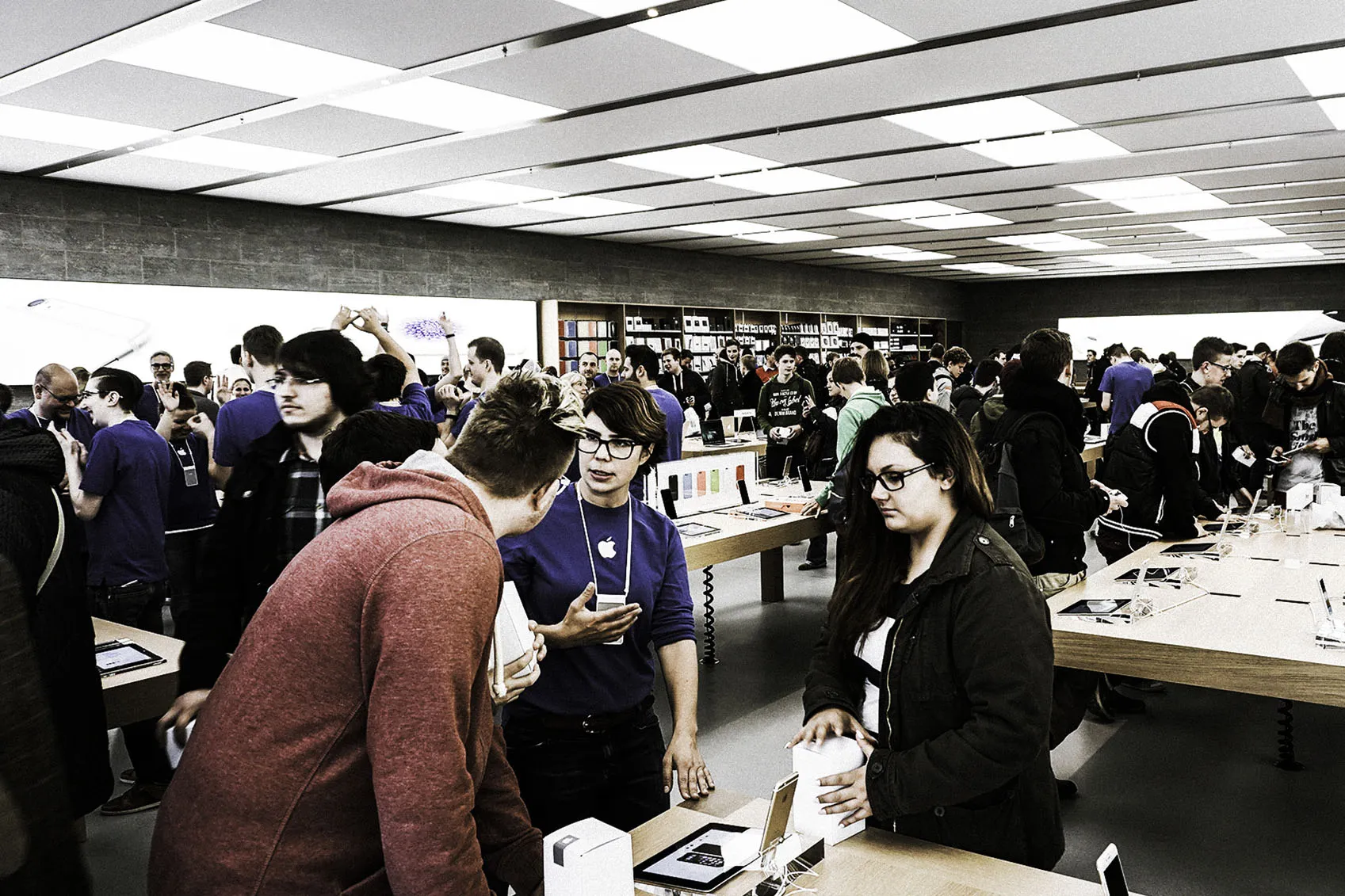
Of course the offline world is also affected by customer generation 3.0. The death of physical retail has been predicted, but far from it: even digital natives still prefer the shopping experience in stores over the internet.
Online retail revenue is growing and already accounts for a significant share, but for most consumers the physical store remains the most important source of shopping. A study by Roland Berger even showed that purchases prepared online and then made in-store generate much higher revenue than the reverse case. It is also remarkable that many purchases are planned online but ultimately made in-store. And it is precisely digital natives, the otherwise internet-affine young target groups, who often shop almost exclusively offline.
If physical retail recognizes its strengths, focuses on them and complements them with suitable online offerings, it will keep consumers on its side in the long term. To do that, it is essential to offer shopping experiences that appeal to customers personally. Many consumers simply do not want to give up haptic experiences (for example trying on products and taking them home immediately).
Add to that the feel-good factor: customers like returning to the same stores because they find what they are looking for and receive personal advice in a familiar, pleasant environment. Great prerequisites for strong customer loyalty. There is also a need, especially pronounced among digital natives, that only physical retail can satisfy: experiencing something together with other people while shopping.
Offline and online as the optimal combination
The challenge of our digital age for retailers is to understand customer behavior both in direct physical contacts and in the multichannel world, in order to set the right priorities and connect channels as well as possible. Digital natives are not a homogeneous group, not even in buying behavior. Opening a web shop does not automatically mean using the full potential of the internet.
What matters is recognizing individuality in targeting, choosing the right form of product presentation, and building loyalty online. Useful online information, for example whether an item is available in-store or how easy a return would be, already creates meaningful value for many customers.
Another major potential, which many companies have recognized, lies in generating customer data. Digital natives can be generous with personal data, but they insist on something in return. If they entrust their data to a company, they expect a clear benefit. Without such a benefit, they demand anonymity and react even more harshly the more they lose control over their data.
It takes sensitivity for all these details that ultimately decide whether companies thrive or merely survive in a digital world. Reality delivers impressive numbers about the online behavior of this generation: 94% use online banking; for flight check-in, self-service kiosks (70%) are ahead of the web (61%); for shopping, the internet is the first source of information for 91%; 85% reserve train tickets online; travel is booked via the web by 94%; 91% research information via web and 73% via app; 92% use apps as the preferred channel for timetable information.
When choosing the right channel for an action, digital natives prioritize convenience (for example location independence with smartphones) over the size of the expected mobile data bill.
It is therefore not surprising that many advertising messages are filled with English terms: "sharing", "posting", "streaming", "tweeting" and "liking". Companies want to adopt the language of digital natives. How authentic this feels, however, depends on the brand and the company behind it.
In summary, as a forward-looking company, you should be aware of the following facts:
Customer generation 3.0 - digital natives - interacts with brands differently than other customer groups. They expect a seamless and coherent customer experience across all channels and touchpoints. The biggest challenge for companies is that digital natives trust ratings and recommendations from both their offline network (family and friends) and their online network (often people they do not know personally at all) far more than the brand promises communicated through advertising.
Digital natives are, paradoxically, both individualists and community people. As individuals, they look for more information, more knowledge and more transparency, while at the same time placing great trust in their communities, which enable deep exploration and extensive discussion of topics of interest.
They accept recommendations from people who share the same interests online but are otherwise completely unknown. After a purchase decision, and often even after a first non-binding contact with a brand, experiences and impressions are shared with "the world". Information exchange happens before, during and after consuming a product or service, in the form of pictures, videos, reviews and comments.
Digital natives expect companies to know them and their needs, to address them on the right channels, and to provide a seamless, honest customer experience across all channels.